


Repechaje 2 - Grupo I
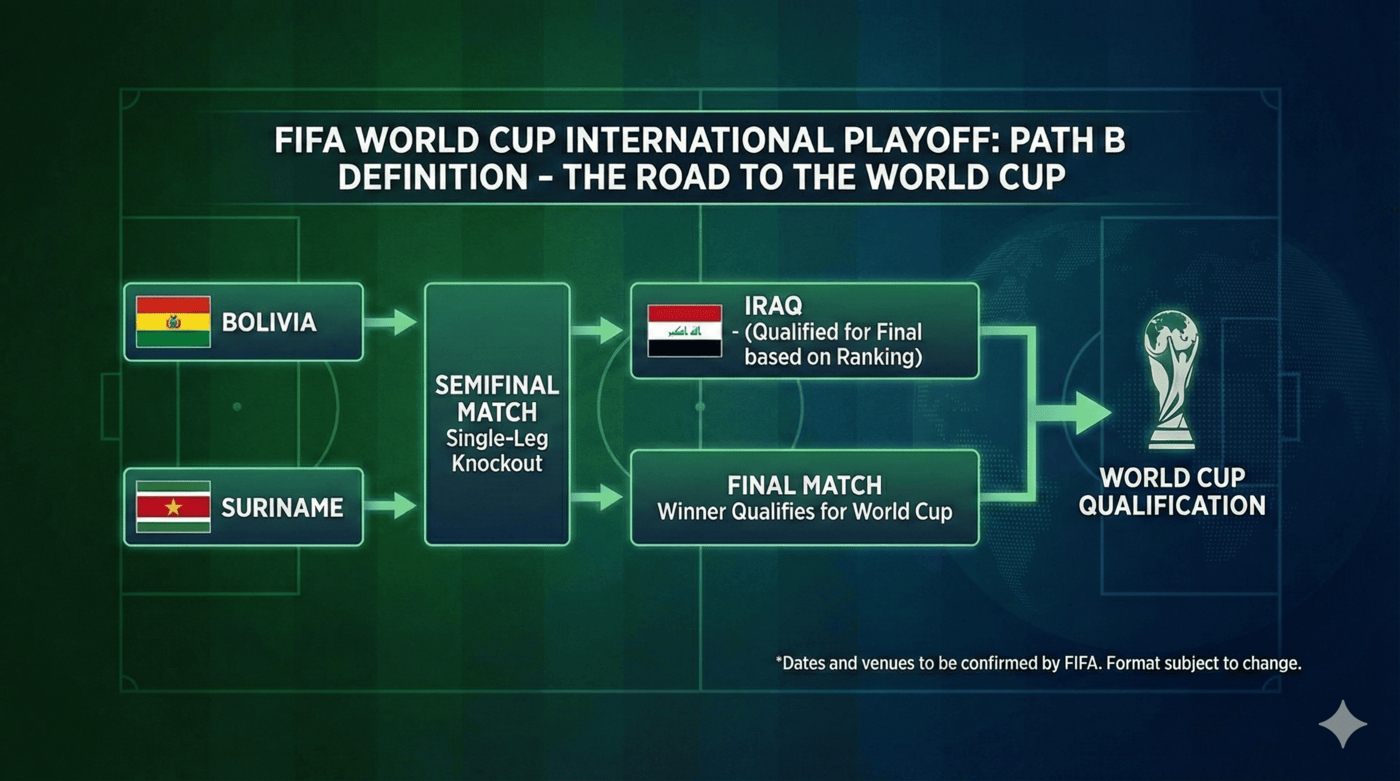
🌍🔥 Intercontinental Play-off Pathway B: Two Matches to Earn a World Cup Ticket 🇧🇴🇸🇷🇮🇶⚽
Subheading: Bolivia and Suriname open the pathway; Iraq waits in the final. Everything in Monterrey, single-leg and with zero room for error.
What Pathway B is — and why it’s decided by details
The FIFA World Cup 2026 Intercontinental Play-offs award two World Cup places through two separate pathways, each made up of three teams. Each pathway is a simple bracket: one semifinal between the two unseeded sides, then one final against the seeded team. Every match is single-leg; if level after 90 minutes, it goes to extra time and then penalties if required.
In Pathway B (Pathway 2), the bracket structure creates an immediate difference: Iraq enter directly into the final as the seeded team, while Bolivia and Suriname must survive a knockout semifinal first.
Official venue and schedule
Pathway B is played entirely in Guadalupe (Monterrey area) at Stadium BBVA (branded as “Stadium Monterrey” during the tournament). Two matches decide everything: the semifinal on 26 March 2026, and the final on 31 March 2026.
| Date | City | Match | Round | Local time |
|---|---|---|---|---|
| 26/03/2026 | Guadalupe (Monterrey) | Bolivia vs Suriname | Semifinal (Match 2) | 17:00 |
| 31/03/2026 | Guadalupe (Monterrey) | Iraq vs Winner of Bolivia–Suriname | Final (Final 2) | 21:00 |
The three teams in the pathway
- Bolivia: starts in the semifinal; must win to earn the right to play for the ticket.
- Suriname: same route as Bolivia; the first night is pure survival.
- Iraq: waits in the final as the seeded team, with the concrete advantage of playing one match fewer.
Match-by-match: a practical read
Semifinal: Bolivia vs Suriname
In a semifinal like this, there’s no “managing” for later. You have to win now just to get a shot at the ticket. These ties often develop in episodes: a careful opening, one moment that flips the game, and a finish where the clock weighs heavier than the flow.
Prediction (plain language): draw. Why: Single-leg knockout naturally pushes teams toward a controlled first hour, and it dramatically increases the chances of the match being decided by fine margins — extra time or penalties — if no one lands an early breakthrough. The key point here isn’t “who they are,” but how the format punishes risk.
Final: Iraq vs winner of Bolivia–Suriname
This is the match that writes the story: the winner qualifies for the World Cup. Iraq arrive with a structural edge: they enter directly at this step, without the physical and emotional cost of the semifinal.
Prediction (plain language): Iraq win. Why: The bracket is designed to give the seeded team a tangible benefit — fewer minutes, fewer opportunities for an accident before the decider. It doesn’t guarantee the outcome, but it tilts the context.
Editorial view
Pathway B is the harshest kind of World Cup prelude: two nights, one city, and the certainty that a mistake has no tomorrow. In these pathways, you don’t win because you “deserve it” in the abstract. You win because you adapt better to single-leg reality: manage moments, avoid gifting transitions, and stay calm when the goal doesn’t arrive.
The warning is simple and universal: in this format, the biggest sin is to gift a long match. If it reaches the final stretch at 0–0, every decision becomes definitive — a needless foul, a poor clearance, a rushed pass out. Because here, the margin isn’t small. It’s zero.